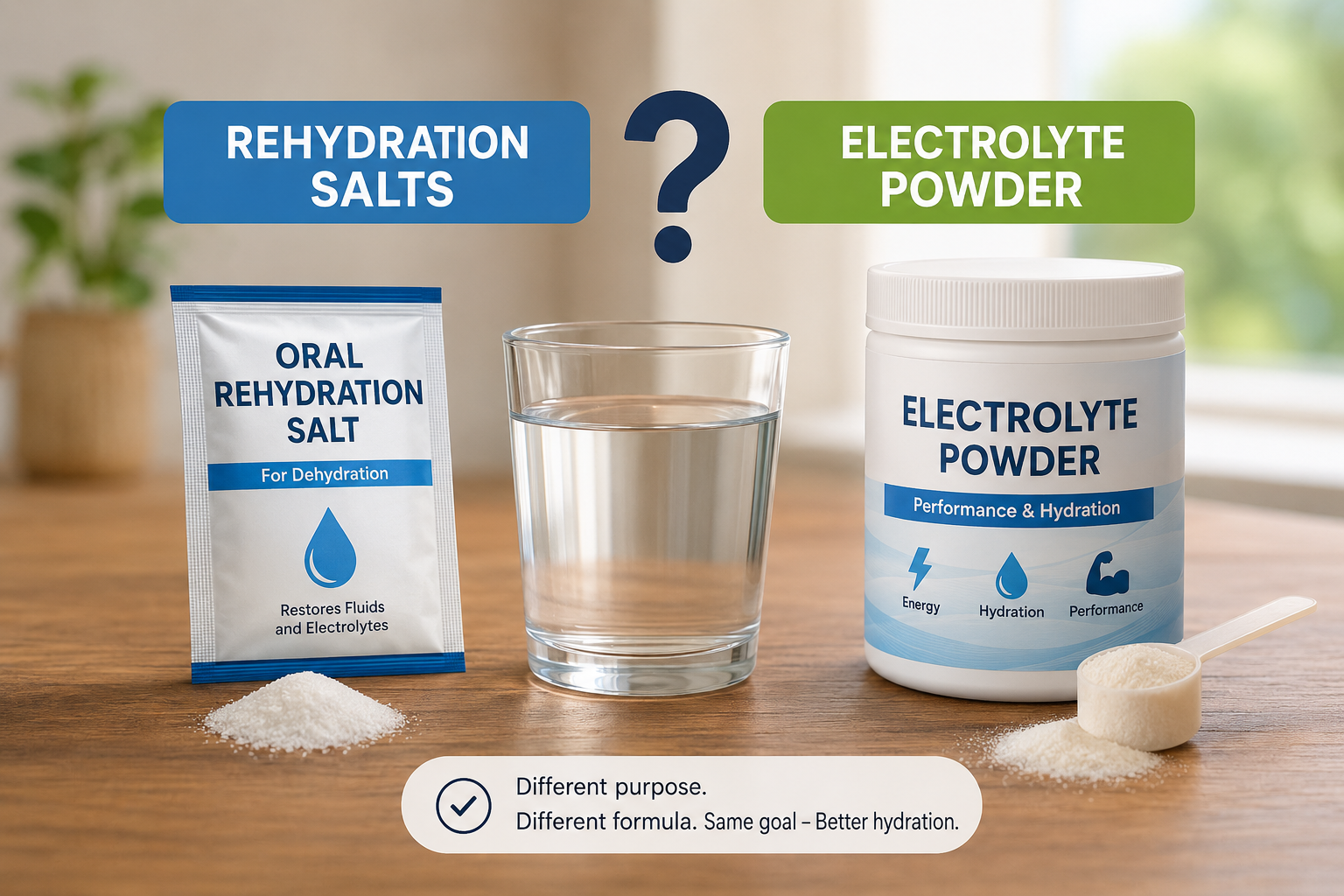
Is Oral Rehydration Salt the Same as Electrolyte Powder? (Manufacturer’s Guide)
Maintaining hydration is crucial for overall health. Many people wonder whether oral rehydration salt (ORS) and electrolyte powder are the same. While both aim to restore fluids and minerals, there are subtle differences in composition, purpose, and usage.
In this guide, Unicure Pharma explains these distinctions clearly for manufacturers, healthcare providers, and end-users.
What is ORS?
Oral rehydration salt is a pre-measured combination of salts and sugar designed to prevent and treat dehydration caused by diarrhea, vomiting, or excessive sweating. It is formulated according to World Health Organization (WHO) standards, ensuring optimal absorption of fluids in the body.
Do You Know? ORS was first developed in the 1960s and has since saved millions of lives worldwide, particularly in pediatric care.
Composition of ORS
ORS usually contains:
- Sodium chloride
- Potassium chloride
- Glucose or sucrose
- Sodium bicarbonate or citrate
The glucose-to-sodium ratio is crucial for efficient water absorption. This is why ORS is preferred in clinical and emergency settings over regular electrolyte solutions.
Pro Tip: Always use ORS prepared as per the manufacturer's instructions. Excessive concentration can cause imbalances rather than hydration.
What is Electrolyte Powder?
Electrolyte powder is a supplement designed for everyday hydration and performance. It replenishes minerals lost through sweat, intense exercise, or mild dehydration. Unlike ORS, electrolyte powders often contain additional nutrients, flavors, and sometimes vitamins.
Common Ingredients
Electrolyte powders may include:
- Sodium
- Potassium
- Magnesium
- Calcium
- Natural flavorings and sweeteners
Quick Fact: Electrolyte powders are widely used in sports nutrition. A 2024 survey by Healthline reported that 62% of fitness enthusiasts rely on electrolyte supplements for workout recovery.
Key Differences Between ORS and Electrolyte Powder
| Feature | ORS | Electrolyte Powder |
|---|---|---|
| Purpose | Treat dehydration due to illness | Maintain hydration during exercise or mild fluid loss |
| Composition | Fixed glucose-salt ratio (WHO standard) | Flexible formulation; may include vitamins, flavors |
| Use Case | Medical, pediatric, emergency | Sports, fitness, daily hydration |
| Preparation | Dissolve in clean water exactly as instructed | Dissolve in water; adjustable serving sizes |
| Taste | Slightly salty | Often flavored, sweeter taste |
Note: Both products restore hydration, but their intended use and formulation differ. Misusing one for the other can reduce effectiveness.
How to Choose Between ORS and Electrolyte Powder
For Medical Use
If dehydration is due to diarrhea, vomiting, or fever, ORS is the recommended solution. Its precise composition supports rapid fluid absorption and electrolyte balance.
For Fitness or Daily Hydration
Electrolyte powders are ideal for athletes, gym-goers, or anyone needing to replenish fluids after physical activity. They offer convenience, taste, and added nutrients beyond basic hydration.
Pro Tip: Read the label carefully to ensure proper dosage and avoid excessive sodium intake.
Key Takeaways
- ORS and electrolyte powder are not identical. ORS is clinically formulated for medical dehydration, while electrolyte powders support daily hydration and performance.
- Proper preparation and dosage are critical to effectiveness.
- Ingredients, taste, and intended use distinguish these products.
- Consult manufacturers like Unicure Pharma for guidance on safe formulation and distribution.
Endnote
Understanding the differences between oral rehydration salts and electrolyte powder ensures proper usage and maximizes benefits. Manufacturers and consumers alike must pay attention to composition, dosage, and purpose to maintain hydration safely and effectively.
FAQs
1. Can I use electrolyte powder instead of ORS for diarrhea?
No. Electrolyte powders may not have the correct glucose-to-sodium ratio required to treat dehydration caused by diarrhea. ORS is specifically formulated for medical hydration.
2. Are flavored electrolyte powders safe for children?
Most are safe, but check sodium content. Children with illness-related dehydration should use ORS instead, as it is clinically tested for safety and effectiveness.
3. How quickly does ORS work compared to electrolyte powder?
ORS typically acts faster in restoring hydration during medical dehydration due to its WHO-recommended formula. Electrolyte powders are more gradual and suited for minor fluid loss.
4. Can ORS be used during sports activities?
While safe, ORS may taste salty and is optimized for clinical rehydration. For exercise-related hydration, electrolyte powders are more palatable and convenient.
For high-quality oral rehydration salt and electrolyte powder formulations, trust Unicure Pharma. Contact our team today to learn more about our manufacturing expertise, compliance standards, and product guidance.