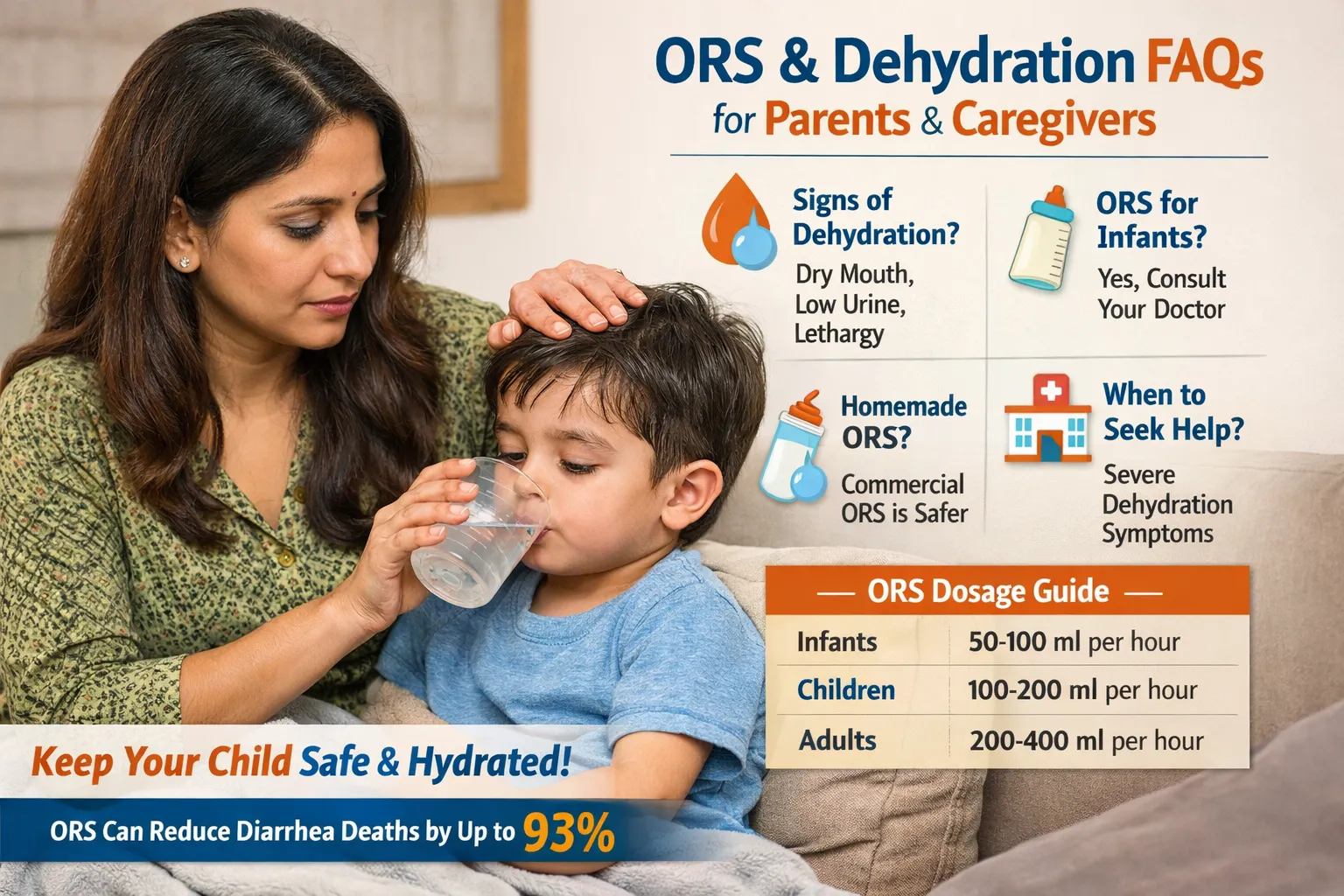
Top 10 FAQs on ORS & Dehydration - For Parents and Caregivers
Dehydration is a common yet serious issue, especially in young children, the elderly, and those experiencing illnesses such as diarrhea or vomiting. In such situations, Oral Rehydration Solution (ORS) can be a lifesaver. Parents and caregivers must understand how to use ORS effectively, identify the symptoms of dehydration, and know when to seek medical help. This blog answers the top 10 frequently asked questions about ORS and dehydration to equip you with the essential knowledge needed for optimal care.
What is Oral Rehydration Solution (ORS)?
ORS is a simple, cost-effective treatment designed to prevent dehydration by replenishing lost fluids and electrolytes. It contains a balanced mix of glucose and salts that promote water absorption in the intestines. ORS is particularly effective in cases of dehydration caused by diarrhea, vomiting, or excessive sweating.
What Causes Dehydration in Children and Adults?
Dehydration occurs when the body loses more fluids than it takes in, disrupting normal bodily functions. For children and adults, common causes of dehydration include:
- Diarrhea and vomiting from infections (such as rotavirus or norovirus).
- Hot weather, excessive physical activity, and sweating.
- Fever, which increases the body’s fluid requirements.
- Certain medications, like diuretics, increase fluid loss.
How Does ORS Help with Dehydration?
ORS is essential for rehydrating individuals experiencing mild to moderate dehydration. It helps replace the fluids and electrolytes lost during dehydration and restores the body’s balance. ORS allows the intestines to absorb water more efficiently, which is crucial during dehydration caused by diarrhea or vomiting.
When Should I Use ORS?
ORS is effective in treating dehydration caused by diarrhea, vomiting, or excessive sweating. If your child or loved one shows symptoms of dehydration, such as dry mouth, decreased urination, dizziness, or lethargy, it’s time to use ORS. It is essential to administer ORS as soon as dehydration symptoms are noticed to avoid complications.
Can ORS be Used for Infants?
Yes, ORS is safe for infants, but it’s essential to administer the solution carefully. In the case of infants under 6 months, always consult a healthcare provider before using ORS. For older infants, it’s recommended to offer ORS in small sips throughout the day, especially during episodes of vomiting or diarrhea.
Can I Make ORS at Home?
While it is possible to make a homemade ORS by mixing clean water with sugar and salt, it is always better to use a commercially prepared ORS solution. The correct proportions of sugar and salt are critical, and homemade mixtures may not always be reliable. Commercial ORS solutions are standardized, making them a safer choice.
How Much ORS Should I Give to a Child or Adult?
The amount of ORS needed depends on the severity of dehydration. For mild dehydration, offer small sips of ORS every 10 to 15 minutes. For moderate dehydration, the recommended amount is typically:
| Age Group | Amount of ORS per Hour |
|---|---|
| Infants | 50-100 ml |
| Children | 100-200 ml |
| Adults | 200-400 ml |
Pro Tip: Start with small sips, and gradually increase the quantity as the person’s condition improves. Avoid large amounts at once to prevent vomiting.
When Should I Seek Medical Attention for Dehydration?
If the individual shows signs of severe dehydration (such as confusion, sunken eyes, or very low urine output), it’s crucial to seek medical attention immediately. Severe dehydration requires prompt medical treatment, potentially including intravenous (IV) fluids. Always monitor for signs of dehydration and don’t hesitate to consult a healthcare professional if you’re unsure.
Can ORS Be Used for Dehydration Due to Heat Exhaustion?
Yes, ORS is effective for treating dehydration due to heat exhaustion. In cases where heat stroke is suspected, it’s important to immediately seek medical attention while using ORS for hydration. Heat exhaustion can cause severe fluid loss, and prompt intervention can prevent further complications.
How Long Can I Use ORS for Dehydration?
ORS should be used as long as symptoms of dehydration persist. For diarrhea, dehydration can last for several days, and ORS should be administered consistently to replenish fluids. However, if the dehydration symptoms do not improve or worsen after 24 hours of ORS use, consult a healthcare provider.
Quick Fact:
According to the World Health Organization (WHO), ORS can reduce the death rate from diarrhea by up to 93% in children under the age of five, demonstrating its critical role in managing dehydration.
What Are the Side Effects of ORS?
ORS is generally safe for most individuals. However, some people may experience mild side effects such as stomach bloating, nausea, or an upset stomach. These symptoms typically subside as the body adjusts. If any severe reactions occur, discontinue use and consult a healthcare provider.
What Should I Avoid While Using ORS?
While using ORS, avoid offering sugary drinks like sodas or juices, as these can worsen diarrhea and dehydration. Additionally, avoid giving salty foods in large quantities, as they may lead to an imbalance of electrolytes.
Key Takeaways
- ORS provides the right mix of glucose and salts to combat dehydration effectively.
- ORS is safe, affordable, and widely recommended by health organizations like the WHO.
- Correct use of ORS can significantly reduce the need for hospitalization in cases of dehydration.
Final Words
Oral Rehydration Solution (ORS) is a vital tool in preventing and treating dehydration, especially in young children, the elderly, and anyone suffering from conditions that cause fluid loss. By understanding the signs of dehydration and knowing when and how to use ORS, parents and caregivers can take proactive steps to protect their loved ones. If dehydration symptoms worsen or don’t improve, it’s always best to seek medical assistance immediately.
Dehydration can be dangerous, but with the right knowledge and tools like ORS, you can keep your loved ones safe. Stay informed and always have ORS on hand for emergency situations. For more information on managing dehydration and other health concerns, visit reliable health websites or consult your healthcare provider. Stay hydrated and healthy!